




What Is World History for Kids? Helping Your Children Connect the Dots Across Time
Why history is one of those subjects that's hard to define yourself. What is world history, really? Is it simply a class where children memorize facts about historical events? Does it only cover how people migrated, how empires and nation-states rose and fell, how the Industrial Revolution accelerated urban growth, or the Cold War between the US and the Soviet Union?
World history includes all of those developments, but it also helps your kid understand how ideas, trade, inventions, and political decisions connected societies across different regions. The subject spans thousands of years, but you don't have to teach it all at once. In this article, we'll show you how to guide your child through the choices and events that influenced the world they know today.
What Is World History?
Dinner is nearly over, and your family has just discussed the lives of two figures from American historical fiction books.
Your child pipes up: “Does the whole world have a history?” You explain that world history is the history of humans as a whole, from the ancient world to the twenty-first century. Your child may then wonder who records all those events. You might explain that world historians study how countries across different continents, including those in the Middle East and Europe, connected through trade.
Then your child may ask how historians know what happened. You explain that they write historical accounts based on evidence. They look at primary sources (objects created or used during historical periods), such as letters, laws, works of art, and buildings. One piece of evidence rarely tells the full story, so you explain that historians compare several sources before they draw conclusions about what happened.
Through a simple conversation, you'll have introduced your child to world history in a way they'll always remember.
Studying world history can help kids:
- See how people from different societies influenced one another in the past and how those connections still affect life today.
- Examine the choices made by people in positions of power and how they used their authority.
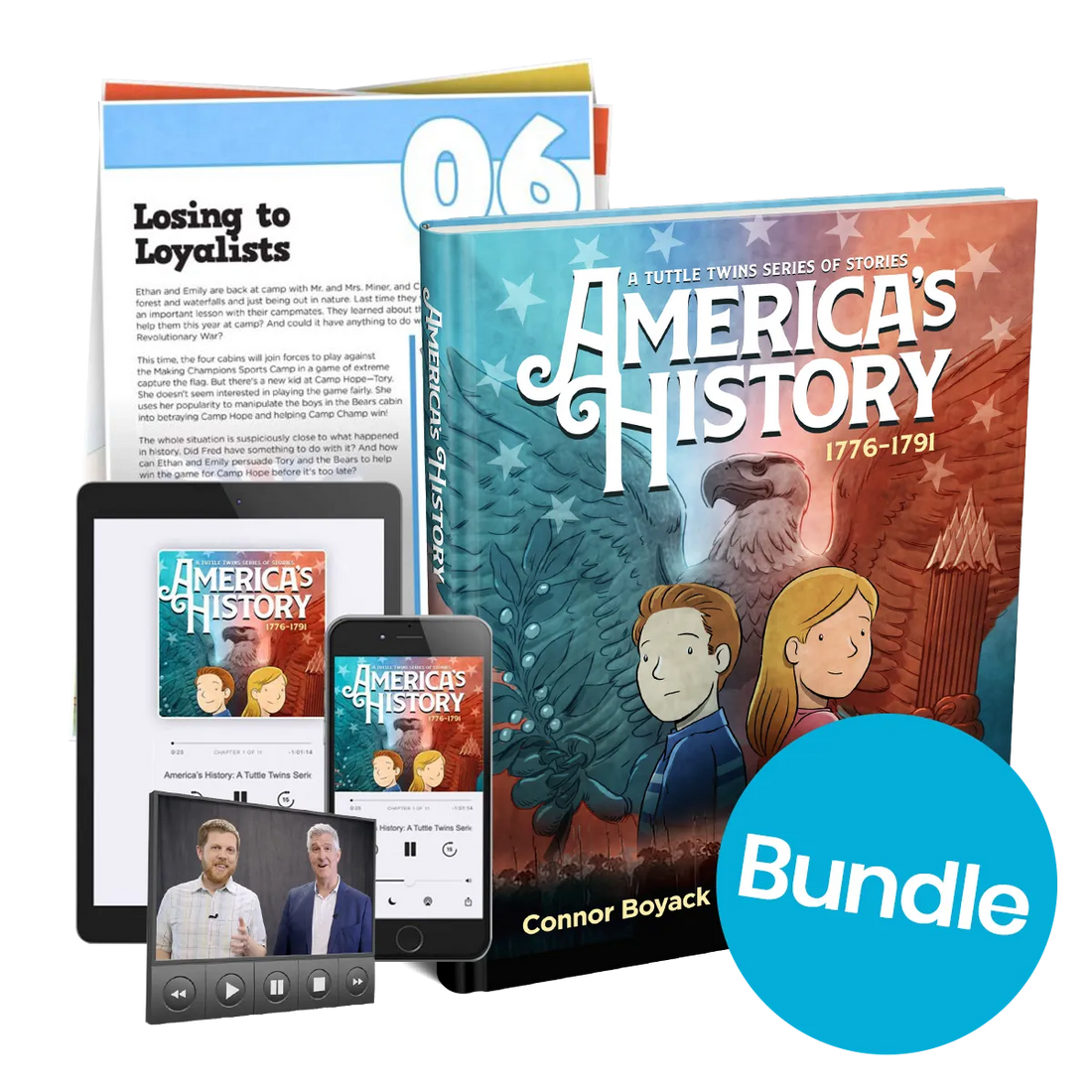
America's History - History Series for Kids
Exciting and engaging stories from America’s past.
Shop NowWorld History Shows Kids How People and Societies Influenced One Another
When exploring world history with your child, guide them through how people transported goods across deserts and oceans, settled in new regions, learned new languages, and conquered foreign territories. Talk about interactions among leaders of nations, including how they negotiated treaties, formed alliances, exchanged ambassadors, and made decisions that affected people beyond their own borders.
This approach helps your child make sense of events that happened centuries ago and understand how they influenced the world today.
People Traded Goods and Ideas Across Continents
One of the ways people in different continents connected, and still do today, is trade. As far back as the 2nd century BCE, traders were using the Silk Roads (a network of land and sea routes) to travel to communities across China, Central Asia, the Middle East, North Africa, and Europe. As they sold their wares in different locations, they brought along their religions, cultural values, languages, and knowledge, which the people in that location could adapt.
A simple example you can discuss with your child is the number system they use in math. No nation single-handedly came up with all numbering systems. Indian mathematicians developed the decimal place-value system, including the use of zero. Scholars in the Islamic world studied the system, wrote methods for calculating with it, and helped transmit it to Europe, where the numerals became known as Hindu-Arabic numerals.
You can also talk about the complications of intercontinental trade. Not all trading relationships were peaceful or voluntary. Some leaders taxed traders who passed through certain routes and fought to control profitable ports. This part of the story raises a useful question for children: What happened to traders and ordinary families when rulers tried to control which routes merchants could use and where they could sell their goods?
Families and Communities Moved to New Regions
Through world history, kids can understand how migration made people from different places learn one another's cultures. For instance, when Dutch settlers moved into the Hudson River Valley, the Muhheconneok people taught them farming practices suited to the region, including crop rotation. The settlers introduced livestock and showed the Muhheconneoks how they used animal manure to fertilize farmland.
World history also gives kids an opportunity to look into why people chose to migrate and compare those choices with situations in which people had little or no choice. For example, some families were looking for more land or fresh job opportunities. Others were forced to move.
Inventors Created Tools That Other Countries Later Adopted
Individuals from different civilizations (a civilization is a large, organized society) developed solutions to different problems, then exchanged inventions with one another.
For example, after people in ancient China first developed paper for writing, knowledge of papermaking spread through Asia and the Middle East into Europe. Each community tweaked production techniques to suit locally available materials.
Knowing that different people contributed to the creation of the tools used today shows kids that progress often happens when people build on one another’s ideas.
Settlers and Travelers Could Spread Diseases But Also Carried Medicines
Mingling with people from other communities also carried health risks. A European traveler with smallpox who went to the Americas could spread the disease to indigenous populations.
Intercontinental travel also helped people share medical breakthroughs. After Edward Jenner developed the smallpox vaccine in England, doctors took it to communities across the Americas in the early 19th century.
This gives your child another connection to trace: the same routes that exposed people to disease could later help communities share ways to prevent it.
World History Helps Kids Examine How Those Who Had Power Used It
Throughout human history, rulers, lawmakers, military leaders, and other powerful individuals made decisions that affected a whole country. Their choices influenced where people could live, what they could own, how much tax they paid, which beliefs they could practice, and whether their nations entered wars.
Exploring these decisions helps kids understand that power can be used to protect people’s rights and keep communities secure. It can also limit people's freedoms. Looking at both ways rulers use power, your child can assess leaders by what they did and how their actions affected others.
Governments Made Decisions That Affected Entire Societies
In ancient civilizations, rulers often controlled armies, collected taxes, settled legal disputes, and ordered large public projects. Some also decided which religious beliefs people could practice or which groups could participate in government.
The rulers of the Qin dynasty in ancient China, for example, introduced common weights, measures, currency, and written characters across the lands they controlled. These changes made it easier for officials to govern and for merchants to trade. However, the government also demanded military service and forced labor from many people while enforcing severe punishments.
This example shows kids that one decision made by the government can result in several consequences. A ruler may introduce a practical solution to a problem while also placing a heavy burden on the people.
Pre-modern Laws Protected Some Freedoms and Restricted Others
Written laws of ancient cities could give some people freedom to do certain things while withholding the same freedom from others. For example, in ancient Athens, only male citizens could vote. Others living in the city didn't have the same right.
Talking about these laws helps your child see how far humanity has come since then. They may also become interested in examining whether modern laws are truly fair to everyone.
Taxes Affected Family Life
Governments throughout history collected taxes from the people they ruled. They used these resources to build roads, maintain courts, defend borders, fund wars, and support the daily work of government.
These decisions directly affected families’ living standards. For example, a family of farmers might have less grain to sell if the government required them to deliver a higher quantity of grain as tax.
People Challenged Rulers and Laws They Believed Were Unjust
People didn't always accept the decisions made by those in power. They expressed their opinions through public speeches, petitions, protests, and, in some cases, revolutions. These parts of global history show kids that collaborating with others toward set goals may bring about the change you desire.

[Photo by Yuganov Konstantin on Canva.]
Where Can Your Family Begin with Historical Events?
When teaching kids history, you don't need to cover the history of humankind in the exact order events happened. While history is a vast subject, and historians may organize it into broad eras from prehistory and ancient civilizations to the modern period, these labels don't have to dictate the order in which your child learns.
You can start with one person, place, problem, or invention your child already finds interesting. A child drawn to the invention of paper might want to learn about how papermaking spread to other regions and how access to it made written communication easier.
As you dig deeper into the topic together, they'll have even more questions. For example, after learning that papermaking spread from China to Samarkand and later to Baghdad, they might want to know how the wider availability of paper allowed more people to keep records, copy books, and share knowledge.
Following one invention this way helps your family explore several regions and periods without jumping between unrelated events. It also gives your child a clear thread to follow:
- Who developed the idea?
- How did other people improve or adopt it?
- What changed once the invention became more widely available?
- Did any ruler, guild, or institution try to control who could produce or use it?
At the end of each session, let your child explain the story in their own words and name the decision they think was most memorable. Their explanation can lead to a family conversation about what they found surprising and what they still want to know.
One World History Question for the Dinner Table
After learning about a historical event, ask your child: “Who in this story made a choice you like, and what would you have done differently if you'd had today's tools and knowledge?”
Once they answer, ask them how they'd approach that problem today and what else they'd try if the first idea doesn't work. Your child may notice that critical thinking and problem-solving require continuous brainstorming and flexibility.
Conclusion
World history is a big subject, and it's still one of the richest ones your family can explore together. It's the kind of subject that turns into real Dinner Table Moments — conversations about people's choices, beliefs, conflicts, and achievements that your kids will keep coming back to. Take it one conversation at a time. Focus on drawing connections between specific events and helping your kids see the bigger picture. With time, they'll ask more thoughtful questions and get better at explaining how the past connects to the real world today.