




The Differences Between Homeschooling vs Pre-K
One of the earliest education decisions parents face is what to do before kindergarten. Should you let your child join a pre-K group and allow professionals to guide those first structured learning experiences? Or should you keep them under your roof and shape those early years yourself?
There is no wrong answer here, since both paths can provide young children with a strong foundation for future formal education. What counts is knowing what each option looks like in practice and which one works better for your family.
What Is Pre-K and What Does It Teach?
Pre-K, or preschool, is an early childhood education program aimed at preparing young children for kindergarten and the formal schooling years ahead. In a standard pre-K classroom, preschoolers are taught all 26 letters of the English alphabet, learn to connect sounds to letters, and associate pictures with words.
They are also taught how to count, learning to use numbers through hands-on activities with everyday objects. Basic shapes and colors, drawing, and even simple model building play a key role in developing motor skills and hand-to-eye coordination, as well as early creative thinking.
Social development is just as important as academic development in most preschools. Social activities help kids learn about sharing, cooperation, following directions, and communicating with their peers. If your child is an only child or has little contact with other kids their age, this structured social environment can be particularly valuable.
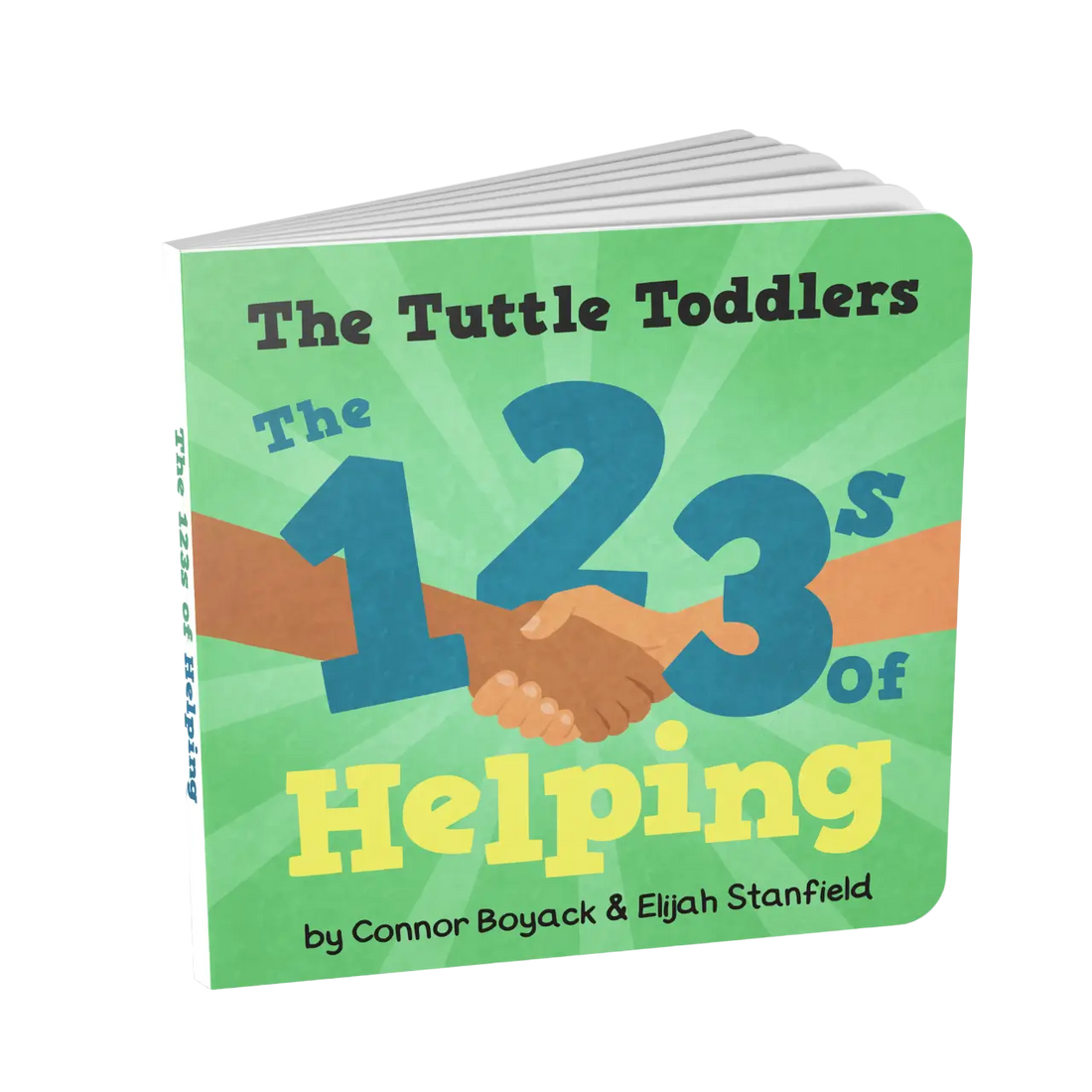
The Tuttle Toddlers 123s of Helping
Creating a brighter, more compassionate world
Shop NowWhat Is Home-Based Pre-K?
Learning at home takes place quite differently from learning in class, since it occurs mostly through play and time spent together. If you're at the start of your journey, you can read our blog to learn how to start homeschooling .
Reading to your child often, telling stories , singing songs, and encouraging them to ask questions help to develop early literacy skills without structured lessons. Counting objects around the house, identifying shapes, finding patterns, and mixing paint colors provide an excellent foundation for your kid's development in math and science.
Field trips to the zoo, story times at the local library, museum visits, hiking, and playdates with friends handle the social development side. Joining a local homeschool support group is another great idea for preschoolers to meet and socialize with other children their age, while parents network with like-minded families. In most cases, these early years spent at home will be among the best of the entire homeschool journey.

[Image by fatihhoca from Getty Images Signature on Canva]
Differences Between Homeschooling and Pre-K
- Structure: Pre-K takes place in a structured school environment with set daily routines, scheduled activities, and defined learning objectives. Homeschooling is much more flexible. Learning time follows the child's rhythm rather than a classroom timetable, and parents can shift focus based on what's holding their child's attention that day.
- Learning Style: In a preschool, the teacher is responsible for teaching a whole class of kids. At home, every learning moment is one-on-one, which gives you the opportunity to adjust lessons in real time to match your child's learning style.
- Socialization: This is what many parents give the most thought to. Pre-K offers built-in socialization through day-to-day peer interactions, giving kids regular practice in sharing, cooperation, and navigating group dynamics. Home-based pre-K requires more intentional effort, like playdates, support groups, field trips, and community activities.
- Cost: While public schools are either free or charge according to parents' income, private preschool options can cost between $4,000 and $18,000 a year. Homeschooling comes with no tuition fees, but parents will have to invest their time and energy.
- Curriculum Control: Pre-K programs follow a set curriculum based on the developmental needs of a particular age group. Homeschooling puts curriculum decisions entirely in the parents' hands. You can create a curriculum tailored to your child's particular interests, strengths, and pace without having to keep up with the rest of the class.

[Image by pixelfit from Getty Images Signature on Canva]
Pros and Cons of Pre-K
Pros
- School Readiness: Attending a good preschool makes the transition to kindergarten and first grade easier for kids because they know what to expect and are accustomed to the social dynamics.
- Socialization: Daily interactions with other kids the same age help preschoolers develop important social skills, such as sharing, cooperation, communication, and conflict resolution. It's especially beneficial for kids who don't get to interact much with peers at home.
- Diverse Experiences: Preschool introduces children to perspectives, cultures, and ideas they might not encounter at home.
- Professional Instruction: Trained preschool teachers bring expertise in child development and early childhood education that many parents feel less confident replicating at home, particularly in the early years.
Cons
- Cost: Preschool programs are quite expensive, and specialized programs, like Montessori, can cost up to $18,000 per year. This can be an important factor for families who don't have access to free public preschool programs.
- Less Individual Attention: In a group setting, preschool teachers have to split their attention among all the children in the class. Children with unique learning needs or who are more reserved may be overlooked in such settings.
- Potential Early Burnout: Structured learning at such an early age can take the joy out of learning for some children, particularly those who thrive in less rigid environments.
Pros and Cons of Homeschooling Pre-K
Pros
- Customized Learning: Each child is unique in how they learn, and homeschooling allows you to build an early education program based on your child's interests and pace. There's no pressure to keep up with a class or hit milestones on someone else's timeline.
- Flexible Schedule: Homeschooling bends around family life rather than the other way around. Learning can happen in the morning, the afternoon, or spread across the day in shorter bursts.
- Better Parent-Child Relationships: The early years spent learning together at home can strengthen the bond between a parent and a child in ways that a day-long school environment simply doesn't allow for. Many homeschooling families look back on the preschool years as some of the most connected of their child's childhood.
- Safe, Low-Pressure Environment: At home, your kids are shielded from peer pressure, social comparison, and the kind of early stress that can sometimes creep into even the best preschool environments. Learning feels like play because, at this age, it largely is.
You can read our blog, " What Are the Benefits of Homeschooling? " for a more in-depth look.
Cons
- Time-Consuming and Demanding: Educating children at home at the preschool age requires real commitment. Unlike dropping your child off a few days a week, home-based pre-K requires you to be consistently present and engaged, which can be challenging when life gets busy.
- Socialization Takes More Effort: Without a built-in classroom of other kids, socializing needs extra effort. Parents have to plan playdates, join co-ops, and go to library story times and other organized group activities.
- Needs Discipline: There's no external structure keeping things on track when you homeschool. Being consistent and sticking to the schedule requires a lot of effort and discipline from the parent.
A Proper Foundation From the Start with Tuttle Twins
Our children's series is perfectly suited for the preschool and early elementary years. The books are illustrated and genuinely fun to read, but most importantly, they introduce concepts that will stay with children long after storytime is over.
For instance, The Tuttle Twins and the Miraculous Pencil brings specialization, trade, and cooperation to life through vivid illustrations, while The Tuttle Twins and the Golden Rule is a warm, engaging story with lessons about empathy and cooperation.
These storybooks translate naturally into the kind of after-dinner conversations that reinforce what kids are already absorbing at home. If you want more options, read our blog about the best books for 3-year-olds in 2026.
We also offer bundles for all ages. There are materials for toddlers, kids, and teenagers, scaling alongside your child's development without having to look for an entirely new curriculum every couple of years.
For parents with teens, our Homeschool Academy offers hundreds of lessons for kids ages 12-18, covering economics, civics, history, and critical thinking. It's a natural continuation of the same ideas introduced in the storybooks, just at a depth and complexity that matches where older students actually are.
You may be able to use Education Savings Account (ESA) funds to pay for Tuttle Twins materials through programs like ClassWallet or Odyssey, depending on your location. Visit our Homeschool Hub to check whether your state currently qualifies.

[Image by Karola G from Pexels on Canva]
Frequently Asked Questions
What Is the Biggest Benefit of Sending Children to Preschool?
Many parents consider socialization as the main benefit. Preschool provides a way for young children to regularly interact with other kids their own age. High-quality preschool programs also help kids get used to certain routines and expectations, preparing them for kindergarten and elementary school.
Can I Homeschool an Older Preschooler?
Yes, many parents educate their preschool-age children through play, reading, exploration, and hands-on activities, building a strong foundation for kindergarten and the formal school years ahead on their own timeline.
How Do Homeschooled Preschoolers Develop Social Skills?
With some intentional planning, homeschooled preschoolers can easily socialize outside a classroom. Playdates, local homeschool support groups, library story time, community activities, and field trips all provide regular interaction with other kids. There are even co-ops for homeschooled children, where kids come together in small groups to study and play.
Can I Combine Homeschooling With Part-Time Preschool?
Yes, and most families find it very helpful. Part-time preschool, a few days a week, gives children structured social interaction and diverse experiences while leaving plenty of time for home-based learning. Parents handle core early literacy and numeracy at home, while preschool covers the socialization and enrichment side.
Conclusion
Both homeschooling and pre-K are legitimate routes to a good early childhood education experience. It all boils down to what your child needs, your family's lifestyle, and what you believe to be important during the preschool period. There's no single formula that works for every family. Many parents start with one path and adjust as their child grows and their circumstances change.
The most important thing at the preschool age is that your child feels secure, curious, and engaged. Spending quality time with your child, reading frequently, encouraging questions, and making learning enjoyable help build a great foundation regardless of the setting.