





Homeschooling in Michigan: What the Law Says and How to Get Started
If you're looking into homeschooling in Michigan, you're probably further along than you think. Most parents expect a stack of paperwork and a curriculum that needs approval from someone who decides whether they are qualified.
None of that is true.
Homeschooling in Michigan is legal and surprisingly simple to begin. The state requires you to cover certain subjects, but it says almost nothing else. There is no testing, registration, or teaching degree requirement.
What you do with that freedom is up to you. This guide gives you the legal foundation, a practical starting plan, and the community resources to make it work for your family. This guide covers exactly what Michigan law requires, how to withdraw from public school, what subjects you're responsible for teaching, how to find your community, and how to build a rhythm that works for your family. Let's get into it.
Why Do So Many Michigan Parents Choose to Homeschool?
Most kids can tell you the year the Civil War ended, but when you ask them how inflation works, what a contract is, or how to think through a financial decision, you'll get silence.
Traditional schools cover a lot of ground. What they don't always cover is the world your child will inherit, one that runs on economics, personal responsibility, and the ability to think independently. Michigan parents who choose to homeschool aren't running away from something. They're moving toward an education that prepares kids for real life, as much as it does for every other standardized test.
This can look different for every family. For some, it's the freedom to go deeper into history and civics. For others, it's the chance to build financial literacy into everyday learning. For many, it's simply the dinner-table moment when a child brings home an idea worth talking about, rather than a worksheet.
Michigan's homeschool law gives you the room to do all of that, and here's what it requires.
Is Homeschooling Legal in Michigan?
Michigan is what's known as a no-notice, low-regulation state. That means there are no mandatory reporting, standardized testing, required inspections, or government approval before you begin. The Michigan Department of Education recognizes online homeschool programs as a legitimate form of education, and parents in this state have two clear legal pathways to do it.
The Two Legal Pathways
Option 1 – The Homeschool Statute (Most Common)
This is the path the majority of Michigan families take. Under the homeschool statute (MCL 380.1561), you educate your children at home as a parent or legal guardian, with no requirement to register with the state, notify your local school district, hold a teaching certificate, or meet any formal credential requirements.
The law requires you to provide an "organized educational program" covering specific subject areas, but it says nothing about curriculum, textbooks, or teaching style. You have full freedom to teach real-world concepts.
Option 2 – The Nonpublic School Exemption
Some families choose to register their home as a nonpublic school through the Michigan Department of Education. This option involves more structure: you'll notify your local superintendent annually and, if you want access to special education services for your child, you'll need to register and meet additional requirements.
Under this pathway, the instructor must hold a teaching certificate, teaching permit, or bachelor's degree. However, a religious exemption applies for families whose beliefs preclude those requirements. Most families starting out have no reason to choose this path unless they specifically want the structure or services it offers.
Most Michigan families use Option 1 because they don't need permission, a teaching certificate, or a degree to homeschool their kids under the statute. You can start as soon as you're ready.
Compulsory School Age in Michigan's Homeschool Law
Michigan's compulsory attendance law applies to children ages 6 through 18. You may begin homeschooling earlier than age 6, as some families do, but the legal obligation kicks in at 6. Once your child turns 18, you determine when they've completed their education and are ready to graduate.
There is no state requirement for minimum school days or hours per year. Public schools are generally required to meet a 180-day, 1,098-hour annual standard, but that doesn't apply to you.
What Are You Required to Teach? Michigan's Required Subjects

Michigan homeschool law is broad. You're required to cover certain subjects, but the law says nothing about curriculum, specific hours, or teaching methods. You choose all of that, including the real-world ideas most schools never get to, like how money, markets, and personal responsibility actually work.
The Required Subject Areas
Michigan law requires instruction in the following subjects at all grade levels:
- Reading
- Spelling
- Mathematics
- Science
- History
- Civics (including the history and current form of civil government at the U.S. and Michigan levels)
- Literature
- Writing and grammar
What the Law Does NOT Require
This is just as important to understand as what is required:
- No standardized testing – Michigan homeschoolers are not required to take any state or national assessments. Families may voluntarily choose testing for their own tracking purposes, but it is never mandatory.
- No attendance records – Under the homeschool statute, you don't need to log school days or hours. (If operating as a nonpublic school, your superintendent may request records, so keep them.)
- No curriculum approval or submission – You never have to show the state what you're teaching or how.
- No teaching certification – Under the statute, no qualifications are required of the parent-educator.
🔑 Key Takeaway: The law gives you the subject list. You decide how to teach it, what materials to use, and when.
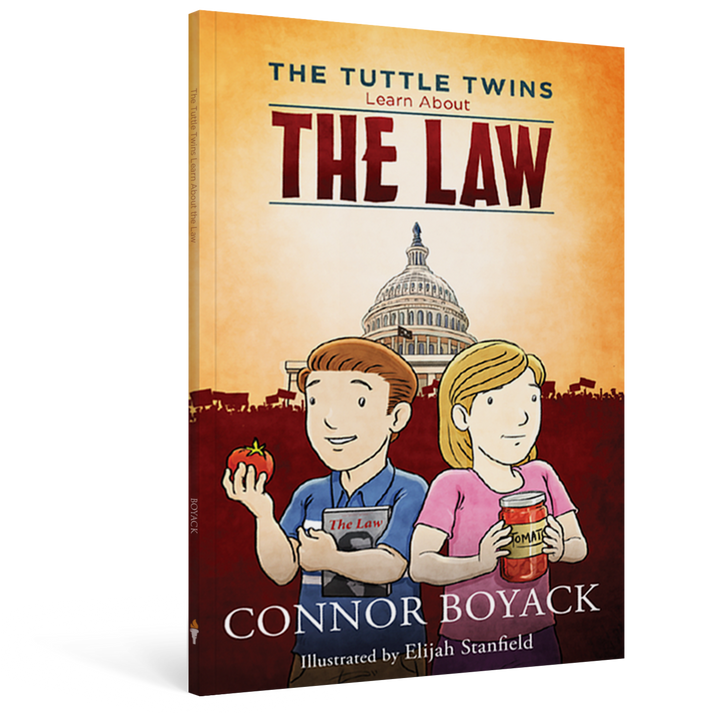
That's the kind of freedom that makes Michigan one of the best states in the country for families who want to take ownership of their children's education. Some families use the Tuttle Twins Homeschool Hub to cover subjects like civics and economics because it's built around stories kids actually want to read, not textbooks they'll forget by Friday. The conversations that follow tend to happen at dinner without any prompting.
How to Start Your Homeschooling Journey in Michigan: A Simple Step-by-Step Plan

Once you understand the law, starting is simpler than most parents expect. There's no application to file, no board to appeal to, and no waiting period. Here's the practical sequence.
Step 1 – Withdraw from Public School (If Applicable)
If your child is currently enrolled, send a written withdrawal letter to the school. Keep the language simple and clear. For instance: "We are writing to notify you that [Child's Name] will no longer be attending [School Name], effective [Date]. We will be homeschooling our child going forward."
The law also doesn't ask you to submit curriculum plans or explain your decision. You won't need the district's approval, just their acknowledgment. So all you need to do is send the letter, keep a copy, and you're done with that step.
If you're pulling a child who has an IEP, note that special education services will shift. Homeschooled students are not eligible for a traditional IEP, but they may qualify for a Nonpublic School Service Plan if your homeschool is registered with the MDE. Contact your local intermediate school district for details.
Step 2 – Choose Your Legal Pathway
Revisit the two options above and decide which fits your family. Most families who start homeschooling choose the homeschool statute for its simplicity and freedom. Unless you have a specific reason to operate as a nonpublic school, the statute path is likely your best starting point.
Step 3 – Choose a Curriculum Approach
This is where the real work begins. Michigan law gives you complete freedom to choose your curriculum style. Common approaches include:
- Structured curriculum – Pre-packaged, grade-level programs with lesson plans and materials
- Classical education – This involves three stages of learning: mastering information, learning to reason, and then learning to communicate persuasively. It is language-rich and deeply rooted in Western history and ideas.
- Charlotte Mason – Prioritizes real literature and living books, nature study, over textbooks.
- Unit studies – Cross-subject themes that integrate history, science, literature, and writing together
- Eclectic – A mix of whatever works best for each child
- Unschooling – Child-led, interest-driven learning without a rigid structure
There isn’t a single right curriculum; what matters is choosing something your child connects with, and that reflects what your family believes is worth learning. If you want to understand the benefits of homeschooling before you commit to a style, this guide can help you get oriented and choose an approach.
For families who want a structured yet flexible approach to civics, economics, and history, which are also subjects Michigan specifically requires, Tuttle Twins can help. It pairs story-based lessons with activity workbooks in a format that makes big ideas click for kids. These resources naturally fit into Michigan's required subjects, taught in a way your kids will ask to come back to.
Step 4 – Build Your Rhythm
Michigan has no required school hours, so you can design a schedule that fits your family. A common new homeschooler mistake is trying to recreate a public school day at home, six hours of structured instruction starting at 8 a.m. It's not necessary, and for most families, it's not sustainable.
A few practical tips:
- Start lighter. The first month is for adjustment for you as much as for your child. You can always add more structure once you find your footing.
- Build in field trips and hands-on learning from the beginning. Michigan offers plenty of real-world learning opportunities like museums, nature centers, historical sites, and Great Lakes shorelines, where what kids read in a book suddenly becomes something they've actually stood in front of.
- Don't skip community. Co-ops, sports leagues, and extracurricular activities aren't extras. For most homeschool families, they're the backbone of the social experience.
If you're wondering whether homeschooling is hard, the honest answer is that the first few months require adjustment. After that, most families say they begin to see their child think more independently, ask better questions, and take ownership of what they’re learning.
Building Community: Michigan Homeschool Co-ops and Support Groups

One of the first things parents worry about when considering homeschooling is socialization for their kids and, honestly, for themselves. It's a real concern. The good news is that Michigan has one of the most active homeschool communities in the country, so you wouldn't have to do this alone, and your kids can easily find like-minded peers.
Finding Your People in Michigan
Here's where to start:
- Michigan Christian Homeschool Network (MiCHN) – Founded in 1984, this is the oldest and largest homeschool organization in the state. They offer resources, legislative advocacy, an annual conference (the INCH Conference), and a statewide directory of support groups.
- Statewide Facebook groups – "Homeschoolers of Michigan" and "Homeschooling in Michigan" are large, active communities where parents share resources, ask questions, and find local connections.
- Regional co-ops – Active co-ops exist across the state, including in Grand Rapids, Lansing, Jackson, Northern Michigan, Southeast Michigan, and more. TheHomeSchoolMom.com maintains an updated Michigan directory organized by city and county.
- Classical Conversations – CC chapters operate throughout Michigan, offering a structured classical curriculum in a co-op setting for ages 4 through high school.
- Michigan Virtual – Michigan homeschoolers can access more than 250 online courses, including AP classes, world languages, and dual-enrollment options for high schoolers.
What Co-ops Offer
Although socialization is a significant benefit of co-ops, they offer more than that. They also allow parents to share teaching responsibilities. One parent can teach chemistry while another teaches writing. Your child gets instruction from multiple knowledgeable adults, and you get relief from not having to be the expert in everything.
Beyond academics, co-ops also provide:
- Friendships and social continuity for kids across grade levels
- Accountability and encouragement for parents, especially in the harder seasons
- Extracurricular opportunities: drama productions, fine arts, gym classes, and organized sports leagues
FAQs
Does Michigan Offer Financial Assistance or Tax Breaks for Homeschoolers?
Currently, Michigan does not offer state-funded financial assistance, vouchers, or tax credits specifically for homeschooling families. There are also no state stipends or reimbursement programs at this time. For updates on possible changes, organizations like MiCHN track homeschool-related policy developments and are reliable resources to follow.
Can My Homeschooled Child Participate in Public School Sports or Extracurriculars?
Michigan law does provide a pathway for homeschooled students to participate in public school sports and elective classes, but policies and eligibility requirements vary by district. Contact your local school district directly to ask about enrollment procedures, immunization requirements, and tryout timelines. Starting that conversation early, before a sports season begins, gives your family the most options.
What Records Should Michigan Parents Keep Even if the State Doesn't Require Them?
Even though Michigan doesn't mandate record-keeping under the statute, maintaining good documentation is wise. Consider keeping a portfolio of your child's work in each subject, notes on the curriculum and the resources you used each year, any correspondence with your school district, and results from any optional assessments. These basic records are valuable for college applications, re-enrollment in public school if needed, and participation in co-ops that may ask for academic history.
How Do Homeschooled Students in Michigan Apply to College?
Most Michigan colleges and universities actively accept homeschool applicants and have clear processes for doing so. Students should build a high school transcript that documents subjects, course descriptions, grades, and any standardized test scores. Recommendation letters from co-op teachers, tutors, or mentors also carry weight. Lastly, strong ACT or SAT scores and documented extracurricular involvement could significantly strengthen applications.
Can I Homeschool If I Have a Full-Time Job?
It's one of the most common questions parents have. Although it depends on your situation, most families make it work better than you'd think. Michigan's homeschool law requires no set school hours or schedule, so you have flexibility in when learning happens. Some families homeschool in the evenings and on weekends.
Others have one parent who works remotely and weaves lessons into the day. Co-ops, online programs like Michigan Virtual, and self-paced curriculum can also carry significant weight, giving kids structured learning time that doesn't depend entirely on a parent being present and available.
Conclusion
Most Michigan parents who start homeschooling say the same thing a year in: they wish they hadn't waited. Not because it's easier than they expected (which it may not be), but because they start seeing their kids differently. More curious. More willing to ask hard questions. More ready for the world than the classroom schedule was ever going to make them.
The law gives you the room. The community gives you the support. What you put in that space is your call entirely.
If covering Michigan's required subjects (especially history, civics, and economics) feels like the hardest part to start with, Tuttle Twins Homeschool Hub is a platform worth knowing. It was built for exactly this: big ideas, told through stories a 9-year-old will actually ask to read again. Start there, and see what your kids bring to dinner.