

6 Best Books for 3-Year-Olds in 2026
At three years old, kids are fascinated by everything, and they’re no longer babies who just want to chew the corners of books. Being a toddler comes with a lot of curiosity, and this is the point where you'll notice your kids asking a lot of questions.
They repeat new words nonstop, counting objects just for fun, and go on and on about new things they've learned. The best books for 3-year-olds are those created to entertain them before bedtime and also to meet that curiosity head-on while helping your child build language, character, and early real-world understanding.
If you’re a parent or guardian, you’d probably agree with this. You want books that hold your child’s attention and teach them something worth knowing, featuring ideas they’ll carry into the world. Their attention span is also not fully developed yet, and you won't want a reading time that bores them every day.
In this guide, we'll talk about six thoughtfully designed board books that do exactly that. These picks balance early literacy (ABCs and counting) with social skills such as kindness and cooperation, and empower young minds without overwhelming them. They’re also designed for shared reading, so simple conversations about choices, helping others, fairness, and how the world works can start tonight.
If you’re building a high-quality home library for your little one, these are excellent ways to start.
Best ABC Board Books for Early “Big Idea” Vocabulary
Alphabet books are still incredibly valuable at age three. While the best ones are mostly about helping your child recite letters, they should also introduce new ideas and new ways of thinking. Here are some of our top picks that tick all of these boxes.
1. The Tuttle Toddlers ABCs of Liberty: Best Overall for Early Thinking
Toddlers' ABCs of Liberty
Introduce kids to freedom through fun ABCs
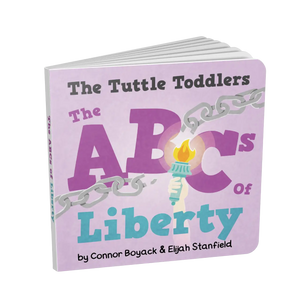
Shop NowThis book earns the top spot for most parents because it introduces the idea of liberty in a way that actually makes sense to a toddler.
The Tuttle Toddlers ABCs of Liberty uses simple words, bright illustrations, and relatable examples to help young children begin understanding ideas such as choice and responsibility. At three years old, kids may not grasp complex definitions, but they do understand everyday experiences such as choosing a toy or expressing themselves. That’s what makes this book effective: it introduces ideas like choice and responsibility through moments that already make sense to a young child.
This book uses simple, everyday activities like these to explain liberty to your kids. It's also a great picture book because it illustrates everything beautifully.
Why We Love It
What makes this book earn a permanent spot on your shelf is how naturally it helps you start a real conversation. Each letter gives parents an easy way to pause and ask a simple question, such as, “What choices did you make today?” or “How do we show kindness when we disagree?” These moments help children build communication skills and learn how their actions affect others.
The illustrations are engaging without being overwhelming, which is perfect for the shorter attention spans that most children exhibit. The board book format is a plus because it's sturdy enough for daily reading or for tossing into a diaper bag when you're on the go.
Most importantly, this book encourages children to think for themselves in age-appropriate ways. It gives them words and ideas to explore, which is exactly what curious three-year-olds need.
Specifications
- Format: Board book
- Recommended ages: 0–4
- Where to buy: Tuttle Twins
Buy The Tuttle Toddlers ABCs of Liberty today
2. The Tuttle Toddlers ABCs of Economics: Best for Practical, Real-World Learning
Toddlers' ABCs of Economics
Make economics fun and easy for little learners
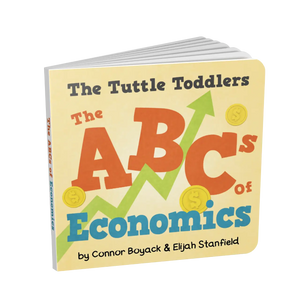
Shop NowEconomics can be introduced much earlier than most parents think; it just has to be done in a way that makes sense for a toddler. Your 3-year-old doesn’t need lessons on budgeting or business. They just need simple examples that help them understand ideas like trading, saving, and why choices have consequences.
For a three-year-old, this might mean understanding why we trade toys or why we save snacks for later.
Why We Love It
This book shines because it connects bigger ideas to situations young kids already notice in everyday life. At this age, children are starting to see how sharing, saving, taking turns, and making choices work. This book helps parents explain those moments in simple, relatable ways.
The ABC format keeps things familiar, while the examples keep children engaged. It’s also surprisingly fun for adults to read, which matters more than we often admit. When parents enjoy the book, it naturally gets read to the kids more often.
It’s a great pick for families who want educational books that go beyond colors and animals, without turning story time into a lecture.
Specifications
- Format: Board book
- Recommended ages: 0–4
- Where to buy: Tuttle Twins
Buy The Tuttle Toddlers ABCs of Economics today
3. The Tuttle Toddlers ABCs of the American Revolution: Best First History Book
ABCs of the American Revolution
Introduce kids to history through fun ABCs
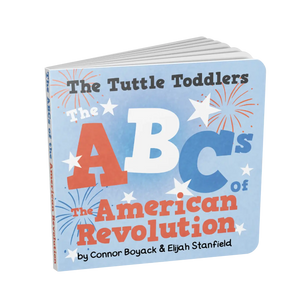
Shop NowThree-year-olds love stories, especially stories about people doing interesting things. The Tuttle Toddlers ABCs of the American Revolution uses that natural interest to introduce history in a playful and engaging way.
Unlike most history books that focus excessively on teaching timelines and dates, this book emphasizes lessons from these events, such as bravery and learning from the past. Each letter highlights a simple concept tied to early American history, making it an excellent first step into historical thinking.
Why We Love It
What makes this book work so well for your little girls and boys is its tone. It treats history as something alive and meaningful. Parents can easily connect the ideas in the book to questions kids already ask, like “Why do we celebrate holidays?” or “Who lived before us?”
The illustrations are bright and inviting, helping children stay focused while new vocabulary is introduced. It also opens the door to future curiosity; kids who hear these ideas early are more likely to be inquisitive and ask more questions as they grow.
This book is a favorite for families who enjoy traditions, storytelling, and helping children understand that the world has a past worth learning about.
Specifications
- Format: Board book
- Recommended ages: 0–4
- Where to buy: Tuttle Twins
Buy The Tuttle Toddlers ABCs of the American Revolution today
Best 123 Counting Books for Character, Civics, and Creativity
Counting books are a staple for three-year-olds, but the best ones do more than help them count numbers. These picks pair numbers with meaningful themes that help children connect math to everyday life.
4. The Tuttle Toddlers 123s of Helping: Best for Kindness and Cooperation
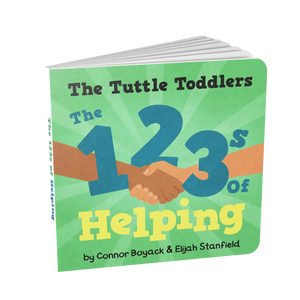
Toddlers' 123s of Helping
Teach counting through simple acts of kindness
Shop NowThe Tuttle Toddlers 123s of Helping combines early counting practice with one of the most important lessons a child can learn: how to help others.
Each number introduces a simple act of kindness or cooperation, showing children that even small actions, like sharing toys or lending a hand, matter.
Why We Love It
At three, children are learning how to interact with others. This book meets them right where they are, showing them that kindness is a way of being that starts with one small choice. The examples are practical and easy to relate to in daily life, which makes it simple for parents to reinforce the lessons long after the book is closed.
The counting element keeps the structure familiar, while the message adds depth. It’s a wonderful way to turn everyday moments into teaching opportunities, in basic acts like cleaning up toys or helping a sibling.
Specifications
- Format: Board book
- Recommended ages: 0–4
- Where to buy: Tuttle Twins
Buy The Tuttle Toddlers 123s of Helping today
5. The Tuttle Toddlers 123s of Innovation: Best for Curious Builders
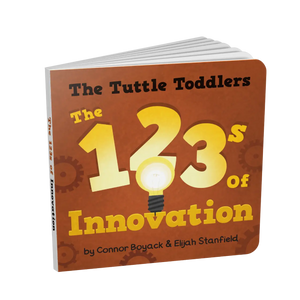
Many three-year-olds love figuring out how things work. The Tuttle Toddlers 123s of Innovation taps into that natural curiosity by celebrating creativity and problem-solving skills.
Through counting, kids are introduced to ideas about creating and improving the world around them.
Why We Love It
This book encourages children to see themselves as capable thinkers. It shows that new ideas come from curiosity and effort, two traits toddlers already have in abundance.
Parents can easily extend the book’s lessons into playtime by asking questions like, “What could we build today?” or “How could we make this better?” It’s an excellent early foundation for creative thinking, without any pressure or complexity.
Specifications
- Format: Board book
- Recommended ages: 0–4
- Where to buy: Tuttle Twins
Buy The Tuttle Toddlers 123s of Innovation today
6. The Tuttle Toddlers 123s of the Bill of Rights: Best Gentle Introduction to Rights
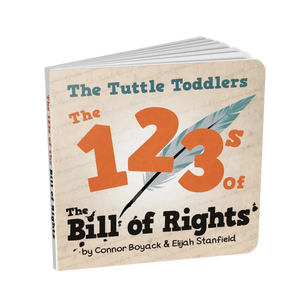
123s of the Bill of Rights
Introduce rights through fun and simple counting
Shop NowThis book offers an age-appropriate way to introduce the idea that people have rights and responsibilities. It gives parents a simple foundation for talking with young children about fairness, boundaries, and respect from an early age.
The Tuttle Toddlers 123s of the Bill of Rights uses simple counting and relatable scenarios to explain concepts like fairness and personal space.
Why We Love It
Rather than focusing on legal language, this book grounds abstract ideas in familiar experiences. It gives parents a way to talk about rules and respect in a constructive way. It’s especially helpful for children who are beginning to assert independence, as it balances personal freedoms with respect for others.
Specifications
- Format: Board book
- Recommended ages: 0–4
- Where to buy: Tuttle Twins
Buy The Tuttle Toddlers 123s of the Bill of Rights today
What to Consider When Choosing Books for Beginning Readers
Choosing books for a three-year-old isn't easy, especially given how much this stage shapes their overall development. With so many options out there, it helps to choose books that are engaging, age-appropriate, and worth talking about together. A few key considerations can help you build a thoughtful collection you’ll enjoy reading together.
- Engagement matters most. Look for books with clear illustrations (picture books) and simple text. At this age, these are the things that are easier to comprehend.
- Durability is essential. Board books are ideal at this age because kids will always be kids. They’re likely to survive a water spill or any mess your child makes. The pages are also easy for little hands to turn.
- Conversation value is a bonus. The best books spark questions and discussion. So be on the lookout for books that make your child stop and ask, “Why.”
- Balance your themes. Mixing ABCs, numbers, social skills, and creativity keeps reading fresh and interesting. You don’t necessarily need dozens of books; a thoughtful variety of options will do.
How Reading Kids' Books Helps 3-Year-Olds Learn and Grow
At three years old, children are in a powerful stage of development. Their brains are making connections at lightning speed, and everyday experiences play a huge role in shaping how they think and understand the world.
The US Head Start program emphasizes that children’s early experiences determine which brain connections remain and grow stronger, and that these early experiences build the foundation for a lifetime of learning and development.
Language development is one of the biggest benefits
When you read to a 3-year-old, you’re introducing new words and sounds to them. Children begin to recognize familiar phrases and experiment with language during play. These simple books can gradually help expand vocabulary far beyond what kids hear in everyday conversation.
Reading also strengthens early thinking skills
Reading also plays a big role in strengthening early thinking skills at this age. When your children listen to these stories, they begin to notice patterns, make connections, and understand simple cause-and-effect relationships.
Emotional and social growth happens through stories, too
At this age, children are learning to share and understand others' feelings. Books introduce emotions and situations in an easily comprehensible way. A character who feels sad or excited gives children the words to describe their own emotions and the confidence to talk about them.
Perhaps most importantly, reading builds connection
Sitting together with a book gives you the chance to have conversations with your kids and catch up. That relationship encourages curiosity and helps kids see learning as something enjoyable to look forward to.
Over time, these learnings compound. It helps your kids grow into confident communicators, thoughtful thinkers, and curious learners who walk into any classroom ready for what comes next.
Tips for Making Learning More Engaging
At three years old, learning works best when it's fun. Toddlers are naturally curious, but their attention spans are still short, so engagement matters more when you're trying to build a learning culture. Here are some major tips that can help:
Follow your child’s interests
If your child is obsessed with trucks, animals, or counting snacks, lean into it. Books and activities that connect to what already excites them will always hold their attention longer.
Keep it interactive
Instead of reading straight through a book, pause to ask simple questions, or let your child point to pictures, or repeat favorite words. Even asking, “What do you think happens next?” helps build thinking and language skills while reading.
Use repetition without worry
Hearing the same book over and over may feel boring to adults, but repetition is incredibly powerful for young learners. Each reread builds memory and comprehension. If your child asks for the same story again, that’s a sign that it’s sticking.
Mix movement into learning
Three-year-olds learn with their whole bodies. Acting out parts of a story, clapping while counting, or using hand motions for letters helps kids stay engaged and reinforces understanding through physical activity.
Celebrate effort, not perfection
Learning at this age should be about exploration, so it's absolutely okay to take things slow. Be consistent and learn a bit every day. Over time, it begins to grow on them and gets easier. Praise their curiosity, and encourage them to ask questions. By keeping learning playful, flexible, and connected to your child’s natural curiosity, you create an environment where education feels natural. Those positive early experiences lay the groundwork for a lifelong love of learning, one fun moment at a time.
Frequently Asked Questions
What types of books are best for 3-year-olds?
The best books for 3-year-olds are ones that can balance education and engagement. There are also options that use bright illustrations and familiar routines that kids can easily relate to. At this age, books that focus on ABCs, numbers, emotions, and everyday activities work especially well. Interactive elements such as pointing, counting, or asking questions also help keep young readers interested and involved.
What should a 3-year-old be reading?
A three-year-old doesn’t need to read independently yet, but they should be enjoying books daily with an adult. This includes alphabet books, counting books, short storybooks, and books that introduce basic concepts such as kindness, sharing, and curiosity. Rereading favorite books is also great and beneficial because familiar stories help children build language skills and comprehension over time.
What educational things should my 3-year-old know?
By age three, many children are beginning to recognize some letters, count small numbers, name colors and shapes, and follow simple stories. They’re also learning important social skills, such as taking turns, expressing feelings, and understanding routines. Educational books support all of this by reinforcing vocabulary, early math concepts, listening skills, and emotional awareness in a gentle, age-appropriate way.
Are educational books better than storybooks?
Educational books and storybooks both play an important role, and one isn’t better than the other. Educational books help introduce letters, numbers, and concepts, while storybooks build imagination, empathy, and comprehension. A healthy mix of both is ideal. Books that blend storytelling with learning, such as counting stories or alphabet books with relatable characters, often offer the best of both worlds for young children.
What are the signs of low literacy?
At age three, literacy development varies widely, so differences are usually not a cause for concern. However, some early signs that a child may need extra support include little interest in books, difficulty focusing during short read-alouds, limited vocabulary compared to peers, or trouble understanding simple stories. The most helpful response is consistent, pressure-free reading time. Regular exposure to books, conversation, and playful learning often makes a big difference over time.
Conclusion
When choosing the best books for 3-year-olds, the major focus should be on finding stories and ideas that they can easily connect with. All the books in this guide are designed to do just that. They support early literacy, spark curiosity, and encourage thoughtful conversations without overwhelming their young minds.
If you’re looking for how to start, The Tuttle Toddlers books are an excellent foundation. From there, adding books about economics, history, kindness, creativity, and rights helps round out a well-balanced early library.
With the right books, reading time can become a shared experience that helps your child grow, one page at a time.