




Best Board Books for Toddlers That Teach More Than ABCs
You're already reading to your toddler every night. The question most parents don't get asked is whether those books are doing anything beyond passing the time, building character, real vocabulary, and the kind of foundation that turns into real conversations a few years from now.
You’re looking for how to start earlier, at home, in ways that feel natural to your kids. And board books are the easiest starting point there is. Your child is already holding them, and you're already reading them every night. The only question is: what are those books actually teaching?
The Tuttle Toddlers series was made to introduce your little ones to real concepts from an early age. It features six board books that introduce economics, liberty, and civics through bright illustrations, simple language, and a rhythm that makes real-world ideas click for a toddler. These are the board books for parents who want everyday reading moments to plant the words and ideas that grow with their child, the early start that makes them Conversation Confident at the dinner table years later.
Starting with Big Ideas in the Toddler Years
When parents look for good board books for their babies, they usually choose classics such as The Very Hungry Caterpillar or Brown Bear, Brown Bear, What Do You See? These are wonderful starting points, but many parents also want books that introduce ideas their children can grow into over time. So the real question is, will this book give your child any essential experiences or knowledge that lasts?
For most board books, the honest answer is no. But that changes when the content itself is built around everyday concepts. The most common question from parents about the Tuttle Toddlers series is: "Aren't economics and liberty too complex for a toddler?" It's a fair question, but the truth is that the toddler years aren't too early for big ideas. It’s the best time to teach them.
You might not notice it right away, but these ideas start to show up in small ways. A toddler who hears about helping and trade might point out how someone “helps” at the store, or ask simple questions that turn into real conversations later. Those small moments are the Compound Effect at work, one book, one word, one tiny conversation that lays the groundwork for the bigger ones years from now.
Understanding the Science of Early Learning
Between ages 0 and 4, the brain forms neural connections at a pace it will never match again, the Center on the Developing Child at Harvard estimates roughly a million new connections every second in those earliest years. Every word a child hears in that window matters. Even big, abstract words such as "trade," "freedom," and "innovation" become part of a growing vocabulary that shapes how children think for life.
When you introduce these ideas, you're teaching your toddlers to define them, and giving them a word they'll hear again at age 6, and again at 10, each time with more meaning layered in. Repetition is how early learning works.
The Years That Shape How They See the World
Long before a toddler can explain what 'fair' means, they're already building a sense of it, from the stories they hear, the words they meet, and the way the people around them talk. Choosing those stories with a little more intention is one of the easier wins parents have at this age
Board books are an ideal touchpoint. Your child hears the same language dozens of times before their second birthday. That repetition is how ideas become familiar, and familiar ideas become the standard in their daily interactions.
The Tuttle Toddlers series was built for this window. If you're also thinking about a more structured approach as your child grows, the Tuttle Twins Homeschool Hub is a great place to explore what comes next.
Our Favorite Board Books for Babies: The Tuttle Toddlers Series
The Tuttle Twins Board Books for babies and toddlers are among the few series designed specifically to introduce economics, liberty, and civic ideas from the very beginning. And the major mission here is to help your child start thinking big from an early age.
Every book in this series shares the same clear, rhythmic language; bold, engaging illustrations; and foundational concepts that give both the child and the parent something to talk about. These are board books that parents enjoy just as much as their kids do. Unlike the typical peek-a-boo or lift-the-flap book, each title is sized for small hands and built around illustrations rich enough to keep both you and your child looking, page after page, read after read.
Here's a look at the complete series.
1. The ABCs of Economics
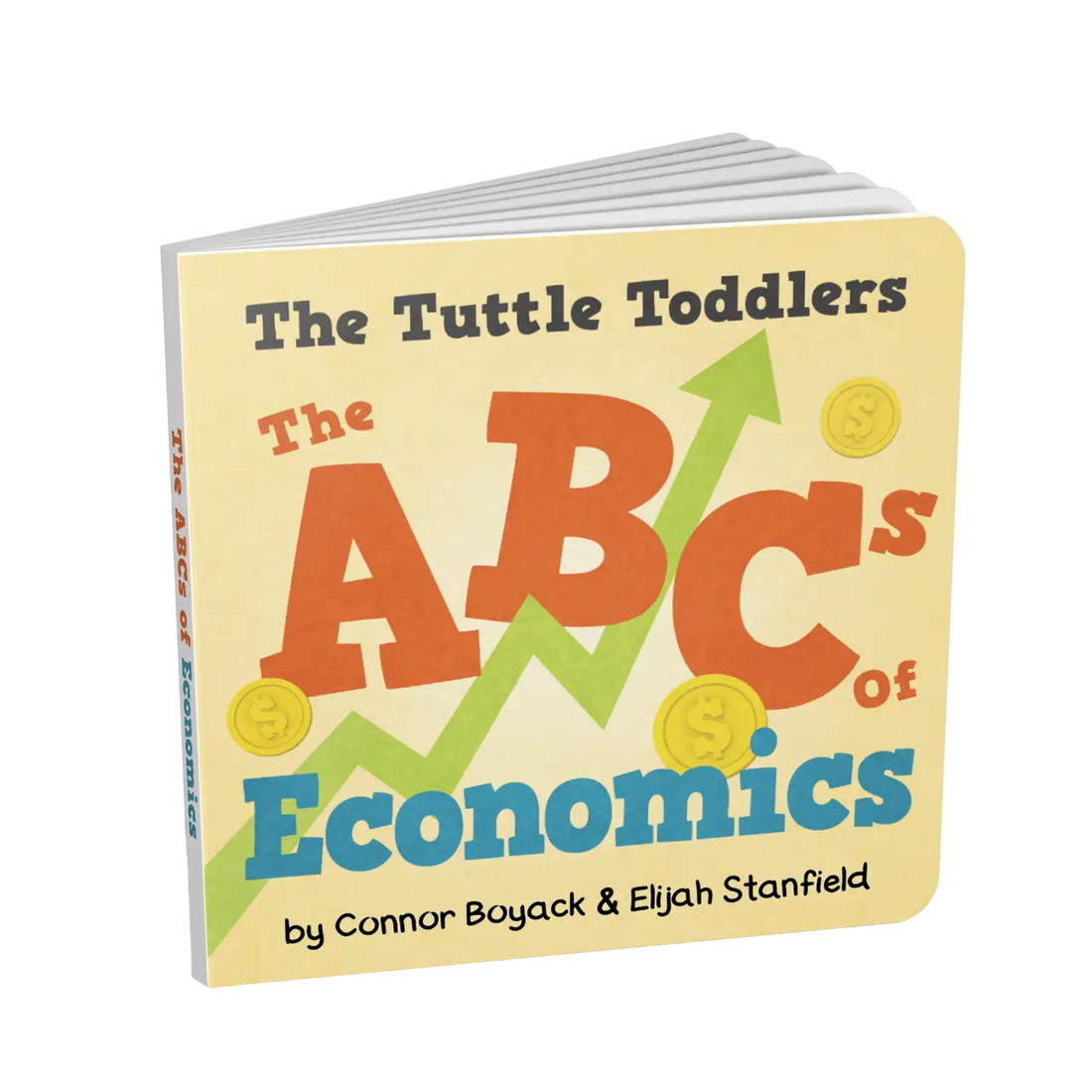
The Tuttle Toddlers ABCs of Economics
Civics, economics, and more, so everyone learns something
Shop NowThe ABCs of Economics is an interactive classic that walks through the entire alphabet, introducing free-market vocabulary from A to Z. Each letter gets its own spread: a bold word, a concise definition, and a charming illustration that brings the concept to life. The voice is warm and clear, no jargon, no lecturing, and the rhythm is fun to read aloud. Adults consistently tell us they learned something new on the pages they thought they were reading to their toddler.
At its heart, the book teaches economic concepts such as free markets, money, and value in simple ways that toddlers can easily understand. That idea, delivered through 26 illustrated letters read aloud every night, speaks to your kids in ways that always pique their interest.
Why We Love It
- Teaches foundational money concepts without boring your kids.
- Parents learn alongside their child.
- Pairs perfectly with the economics curriculum your child will grow into at age 5.
- Enjoyable to read aloud; the rhythm makes re-reads feel effortless.
- The perfect foundation for the Tuttle Twins chapter books on economics.
Get The Tuttle Toddlers ABCs of Economics today.
2. The ABCs of Liberty
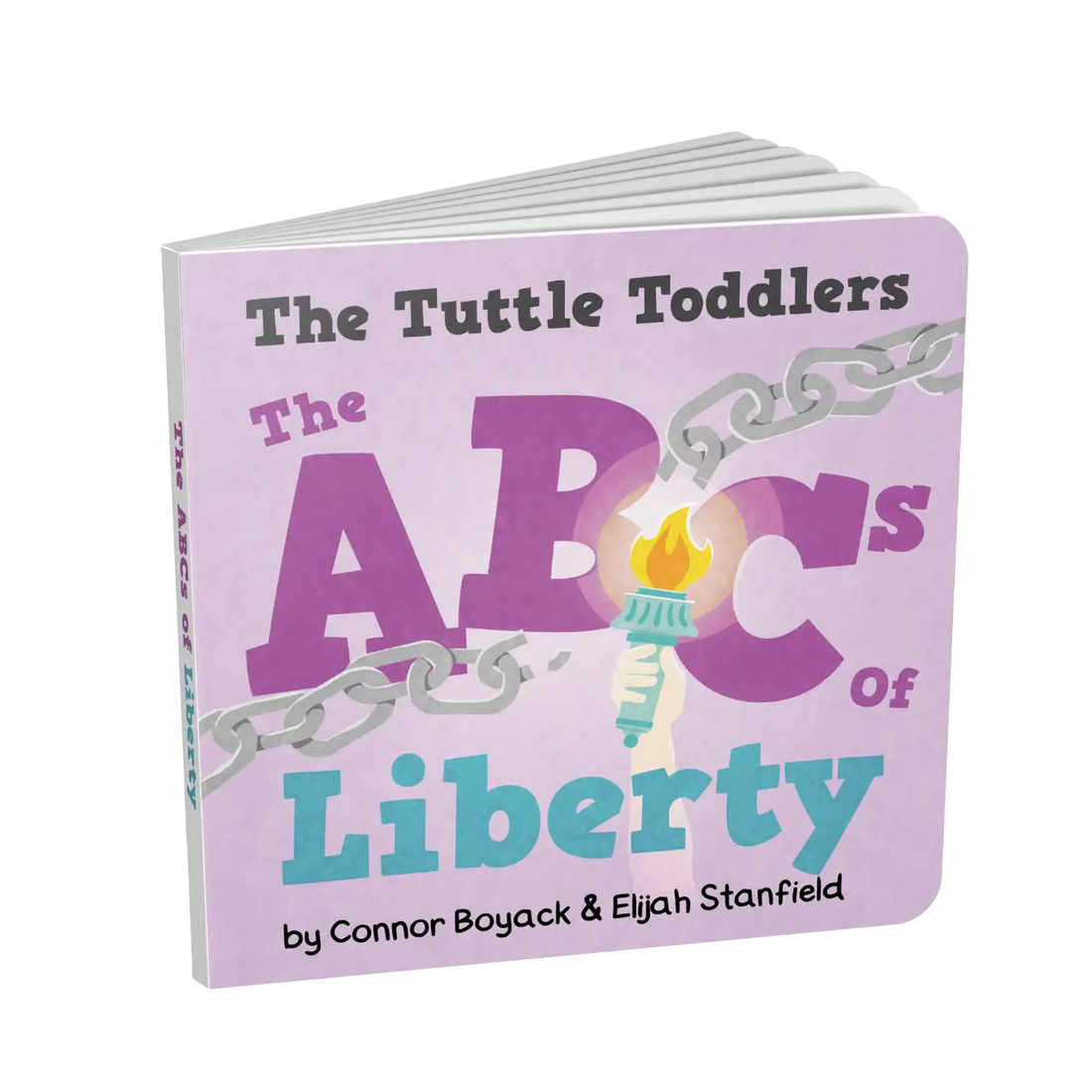
The Tuttle Toddlers ABCs of Liberty
Making complex concepts simple and engaging for young minds
Shop NowWhat does it mean to be free? That's a question most adults struggle to answer clearly. The ABCs of Liberty answers it beautifully for toddlers.
This book takes your little ones on an alphabet adventure through the principles of freedom: due process, individual rights, voluntary exchange, and more. Each concept is introduced with enough clarity, giving children vocabulary that becomes meaningful long before they encounter these ideas in a classroom. Young readers will return to this one again and again as they grow.
Why We Love It
- Plant the words 'fair' and 'freedom' early, so they're already familiar long before a teacher introduces them.
- Warm, story-first approach that means your child will never feel like they're being lectured.
- Gives toddlers a vocabulary for "fair" and "freedom" before those concepts get complicated.
Get The Tuttle Toddlers ABCs of Liberty today.
3. The ABCs of the American Revolution
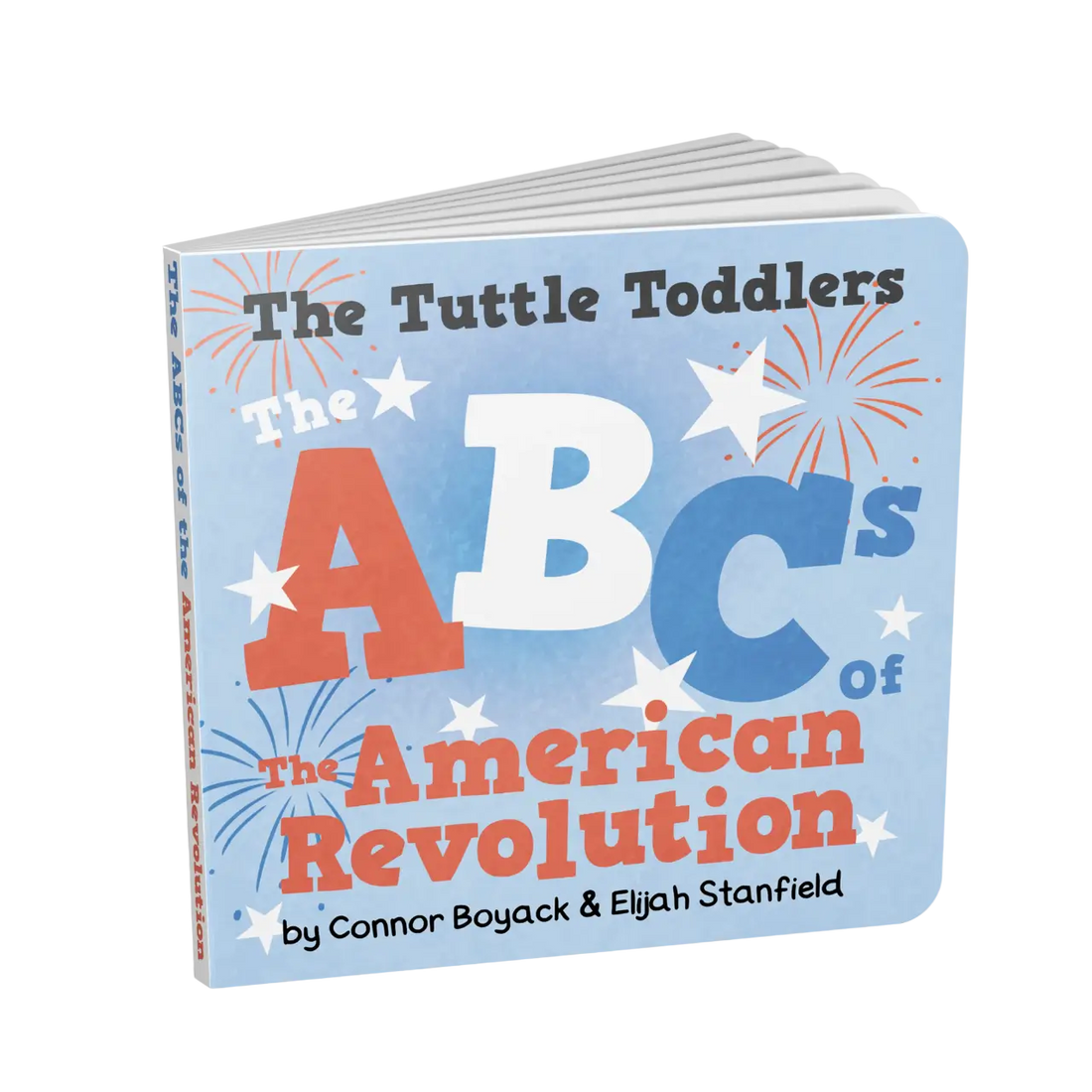
The Tuttle Toddlers ABCs of the American Revolution
Charming illustrations and simple storytelling
Shop NowHistory doesn't have to wait until third grade. The ABCs of the American Revolution brings the people, events, and ideas of America's founding to life in an alphabet format accessible to the youngest readers.
Topics range from the Articles of Confederation to the Boston Tea Party, the Continental Congress, and beyond. Even babies benefit from the illustrations, which are detailed and exciting without being overwhelming. By ages 3–4, children will start asking questions that raise real family conversations. The ABCs of the American Revolution is a great book for first-birthday gifts and baby shower celebrations; it's the kind of new book that stays on the shelf for years to come.
Most kids don't meet these names and ideas until much later, when they're asked to memorize dates rather than understand the story. Starting here gives your child a frame to put those facts into when the time comes, and a head start on conversations they'll have for years. Pair it with the American History collection when they're ready for more.
Why We Love It
- Covers topics most schools skip entirely, even in later grades.
- Bright, detailed illustrations that make history feel exciting.
- A natural favorite board book edition for grandparents who love history to read with their grandchildren.
- Creates the kind of dinner-table conversations the whole family can join in on.
Get The Tuttle Toddlers ABCs of the American Revolution today.
4. The 123s of Helping
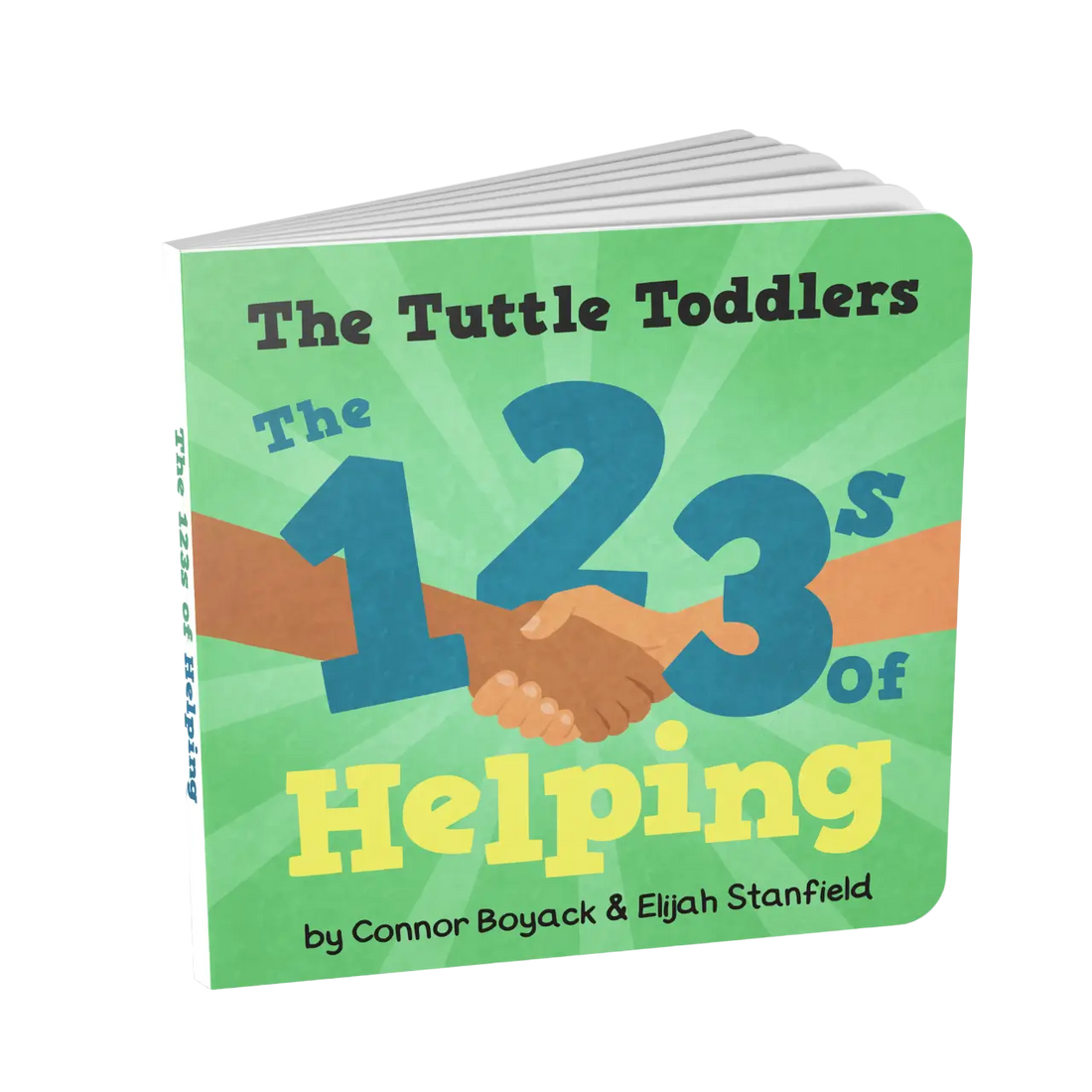
The Tuttle Toddlers 123s of Helping
Creating a brighter, more compassionate world
Shop NowDid you know that an economy is just a group of people helping one another? That's the idea at the heart of this book, and it's one of the simplest, most powerful things a toddler can grow up understanding.
The 123s of Helping is a sturdy board book designed for ages 0–4 that uses numbers 1 through 10 to walk young readers through the idea that people work to help each other every day. Through charming illustrations and simple language, children discover real jobs and roles in everyday life. They also find out that people depend on others for goods and services, and that cooperation and contribution are things they can even be part of.
The counting format is what makes this one so readable. Kids naturally want to go through each number again and again, and every time they do, the ideas land a little deeper.
Why We Love It
- Blends numeracy practice with foundational economic thinking in a single read.
- The "people helping each other" idea is simple enough for a toddler.
- Kids ask about every page, and the questions they start asking are the kind that show up at dinner a few hours later.
- Works perfectly as a bedtime book that parents enjoy, too.
Get The Tuttle Toddlers 123s of Helping today.
5. The 123s of Innovation
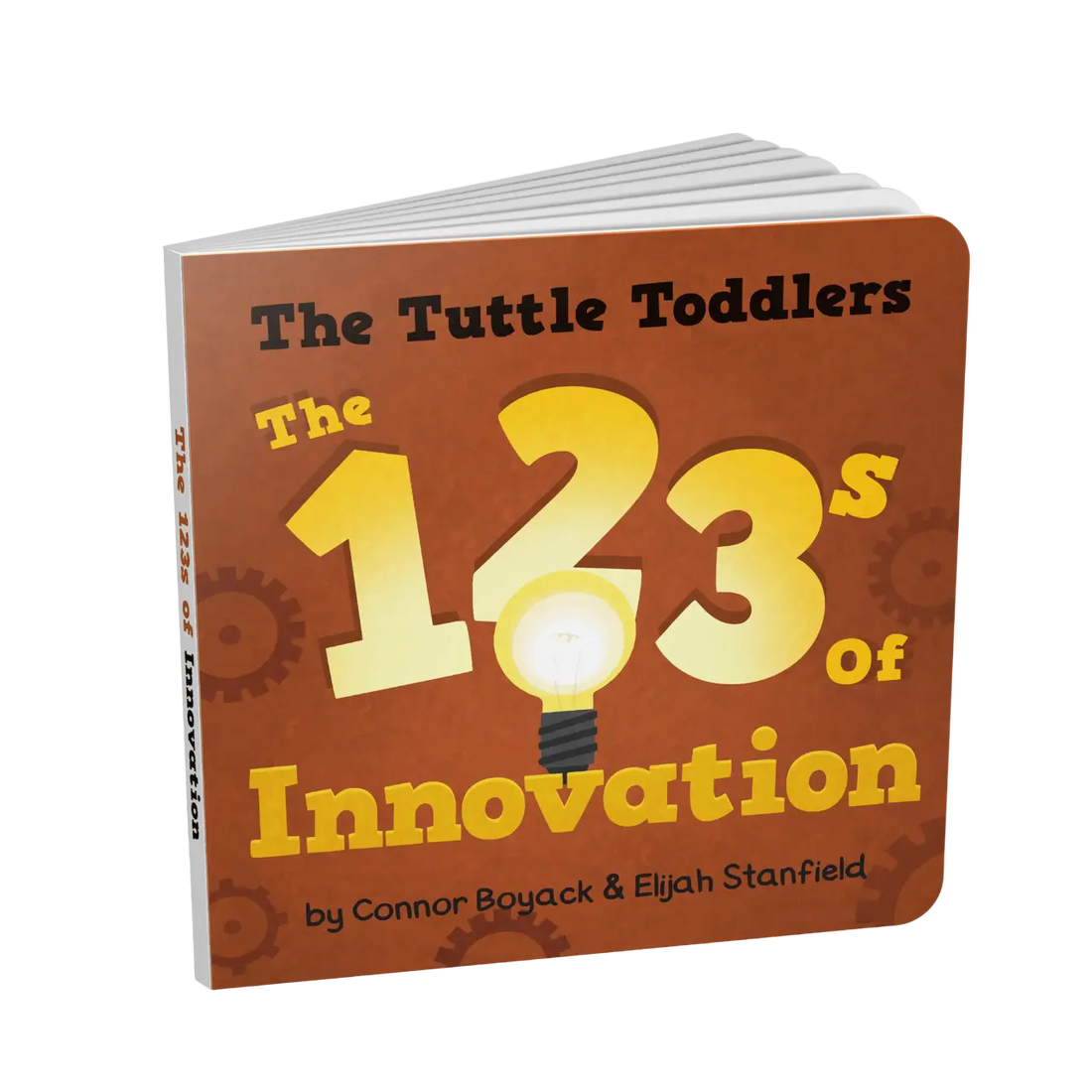
The Tuttle Toddlers 123s of Innovation
Magic of creativity and the power of human ingenuity
Shop NowWhat if your child grew up understanding that every invention around them started with someone who saw a problem and decided to solve it?
The 123s of Innovation profiles 10 examples of innovation that changed human life, one per number. It shows children that curious people solving real problems make everyone's lives better and that they could be one of those people someday. Kids absolutely love discovering that the world around them was built by inventors just like them.
The entrepreneurial mindset starts here, with the habit of asking, "Who made this? Why? How did it help?" The illustrations feature diverse innovations from across history and cultures, giving children a broad worldview of human ingenuity.
Why We Love It
- Teaches the core truth of entrepreneurship: innovation means making others' lives better.
- Kids who read this start noticing inventions around the house and asking who made them.
- Perfect for future STEM learners and introduces the idea that curiosity creates change.
- Pairs beautifully with the entrepreneurship books, such as The Tuttle Twins and Their Spectacular Show Business, for older siblings.
Get The Tuttle Toddlers 123s of Innovation today.
6. The 123s of the Bill of Rights
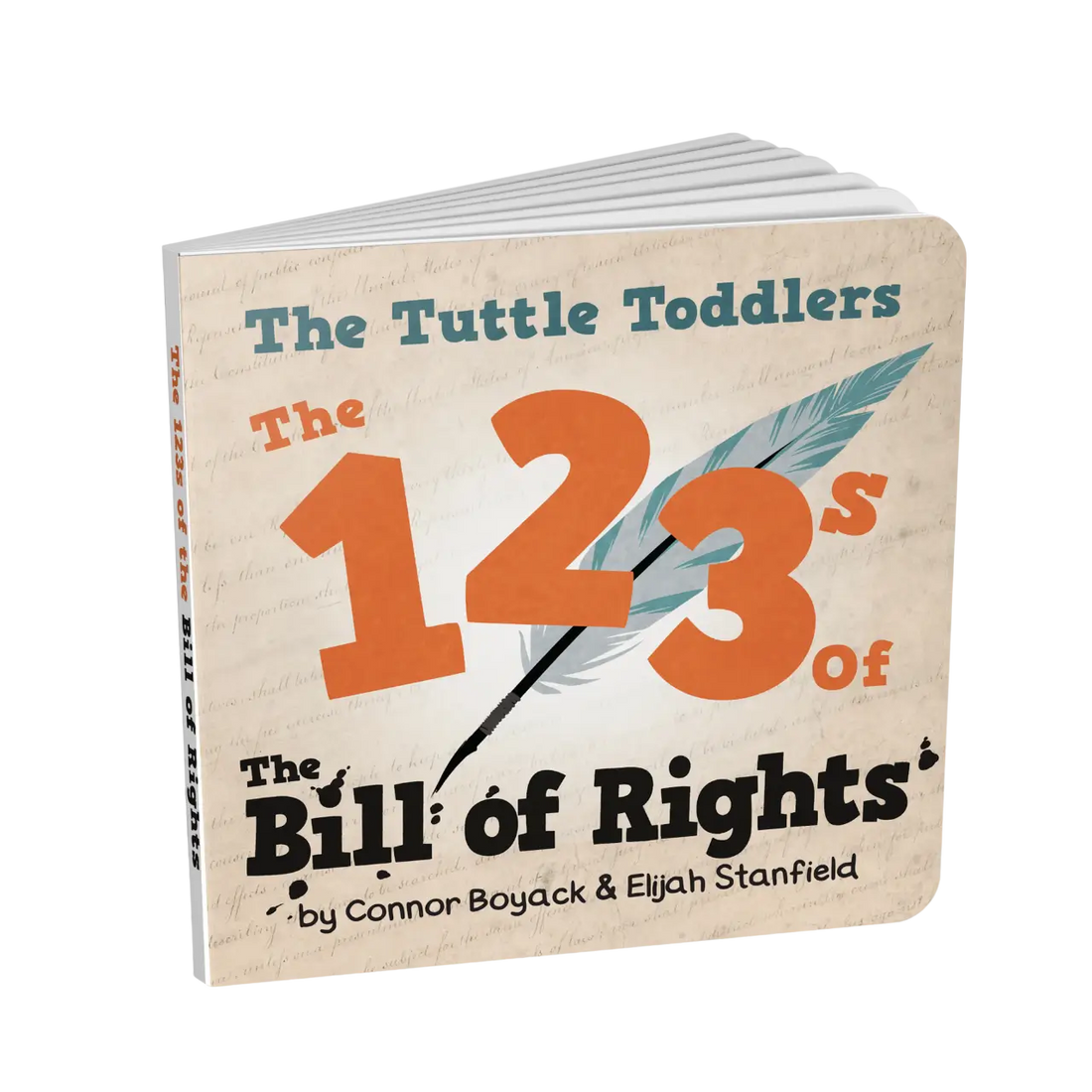
The Tuttle Toddlers 123s of the Bill of Rights
Perfect for little learners and grown-ups alike
Shop NowYou're never too young or too old to learn the basic ideas of freedom. That's the premise behind this book, and it delivers on it completely.
The 123s of the Bill of Rights walks through numbers 1 to 10, with each number introducing a right protected by the Constitution, along with a clear definition and a charming illustration. It's an interactive journey through the fundamental rights most adults rarely stop to explain. It makes those rights feel completely accessible to a toddler hearing them for the first time.
The book is recommended for ages 0–4, which means it works as early vocabulary exposure for babies and as a real conversation starter for preschoolers. By the time these ideas come up at school, your child will already recognize the words, and that familiarity makes the lessons land deeper.
One parent summed it up well: "Funny and informative! These books are tongue-in-cheek, tell the truth, and are a super cute way to teach the basics to littles."
Why We Love It
- Gives children language for "fair" and "freedom" long before school complicates those words.
- Simple enough for a toddler to absorb through repetition; deep enough for a 4-year-old to ask questions.
- A meaningful gift for new parents and grandparents who care deeply about civic values.
- Families report this one stays on the shelf long after other board books have been outgrown.
Get The Tuttle Toddlers 123s of the Bill of Rights today.
How to Read Board Books with Toddlers: Getting the Most Out of Every Page
A board book is only as good as the conversation it starts. The Tuttle Toddlers series is built to give you those openings, but a few simple reading habits turn a 3-minute read into your child's favorite of the night.
Tips for Reading Board Books Aloud
- Don't rush. Point to the illustrations and let your child's eyes follow.
- Connect concepts to real-life scenarios whenever you can. For instance, you could introduce a sentence like, "See? The farmer trades with the baker, just like when we go to the market." That connection to real-world scenarios is what makes things clearer.
- Repeat regularly. The repetition is the learning, and each read adds another layer of assimilation.
- Invite older siblings to read to younger ones, as it reinforces comprehension for both children.
- Asking open questions such as "What do you think happens when people help each other?" invites thinking and builds better reasoning.
FAQs
What Age are Board Books for?
Board books are ideal for 6-month-olds through the toddler years, up to ages 3 or 4. The Tuttle Toddlers series works well for this age group: babies love the colors, while toddlers can begin to connect concepts to meaning. There's no time too early to start reading to your child. The earlier you begin, the more those words and ideas become part of how they understand the world.
Can Toddlers Really Understand Economics and Liberty?
In the same way they understand "sharing is caring," toddlers can absolutely grasp that "an economy is just people helping each other." The Tuttle Toddlers books feature meaningful illustrations, so the concepts are clear and easy to understand. By the time children who've grown up with these books are 4 or 5, they have a simple foundation in their everyday vocabulary, and that's where the real fun starts: real questions at the dinner table, real conversations the whole family can join.
How Durable Are the Tuttle Toddlers Board Books?
Like all board books, the Tuttle Toddlers series features laminated cardboard pages designed to withstand chewing, dropping, and everything else a determined 18-month-old will try. The pages are built to last through hundreds of reads, which matters when the same book gets opened nightly for two or three years before your child's library grows.
Which Tuttle Toddlers Book Should I Start With?
If you're starting with one title, begin with The ABCs of Economics; it covers the most universally relevant concepts and beautifully sets up the rest of the series. If you're buying as a gift, the Tuttle Toddlers Combo Set is the easiest recommendation and the best value. For families who want the complete library from the start, the full 6-book set is the best option. You won't find yourself wishing you'd bought more; you'll already have everything.
Can I Use These for Homeschooling a Toddler?
Yes, you can. The Tuttle Toddlers books fit naturally into any preschool homeschool curriculum as a daily read-aloud. They introduce vocabulary aligned with economics, civics, and history that most formal curricula don't cover until much later. Many homeschool families use the series as their "first curriculum" before transitioning to the Tuttle Twins children's series or guidebooks for teens. For more on the benefits of homeschooling and how to start homeschooling, the Tuttle Twins blog has resources specifically designed for families at this stage.
Conclusion
Most board books teach shapes and animals, but the Tuttle Toddlers series does that while simultaneously teaching your child how the world works. These books give your toddler a wide vocabulary of ideas that would be relevant to their education as they grow. Concepts like voluntary trade, individual rights, and human innovation become part of your child's everyday vocabulary, words they already know by the time the world starts asking them to engage with the ideas behind them.
As they grow older, the Tuttle Twins children's storybooks and chapter books for ages 5–12 pick up where the Tuttle Toddlers leave off. They help carry those same real-world ideas forward through stories your child can read on their own.
Get the complete Tuttle Toddlers set today and build the board-book library you and your child will love reading together.
References
- Center on the Developing Child at Harvard University. (n.d.). Key Concepts: Brain Architecture.